
If you are waiting for the right conditions to write your novel, more time, more energy, fewer responsibilities, a perfectly organized office, you may be waiting longer than you’d like.
Most beginner writers are not short on desire. They are busy. Between work, family, relationships, and everyday life, writing often becomes the thing that gets postponed until everything else is handled.
The truth is, a great writing space and routine are not about escaping your life. They are about fitting your creative work into your current life.
Let’s talk about how to do that in a way that feels supportive instead of demanding.
A Writing Space Should Reduce Friction, Not Add Pressure
A common belief among new writers is that a “real” writer has a dedicated office, a special desk, and uninterrupted time. That belief can sabotage progress before it ever begins.
A great writing space does not need to impress anyone. It needs to make it easier for you to start.
Begin by choosing a space you can access regularly without a lot of setup. That might be a corner of the dining table, a desk in your bedroom, a favorite chair, or even a nearby coffee shop. Your writing space does not have to be limited to one location.
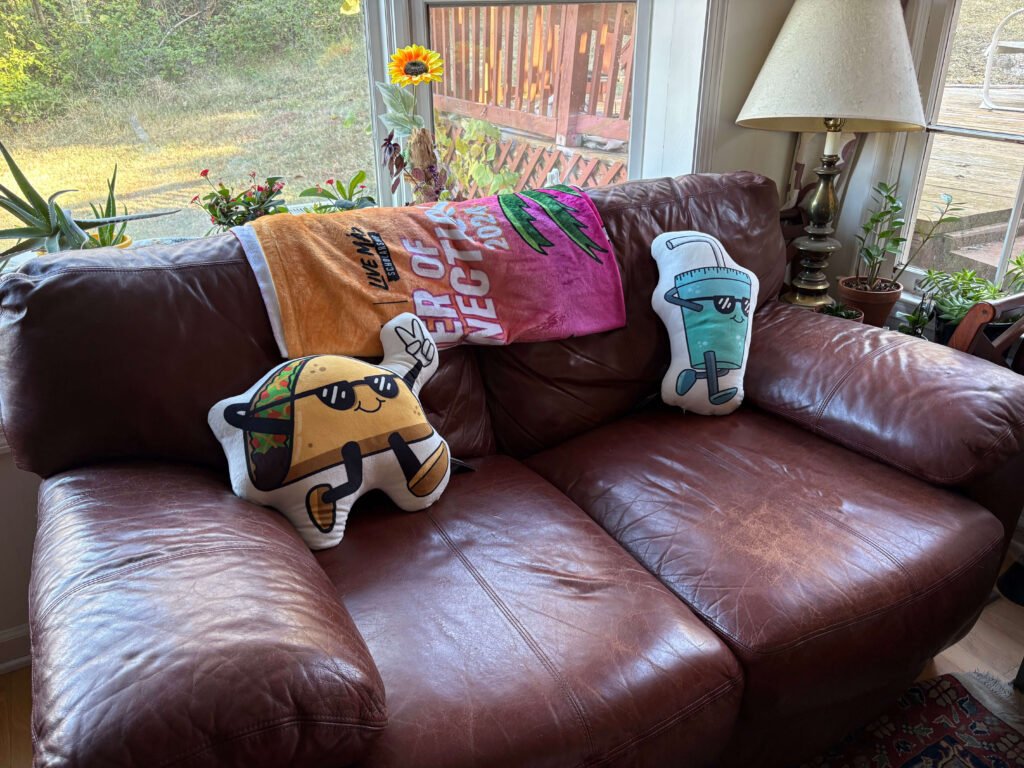
For me, I rotate between the comfort of my living room couch with my laptop on a foldable TV tray table (I love the flexibility of moving it to any seat), a comfy couch near a bay window for natural lighting, local coffeeshop when I want to be away from house, and even walking while using dictation. What matters most is that these options allow me to write when the urge strikes, instead of waiting for ideal conditions.


Comfort matters more than aesthetics. You want a chair that doesn’t distract you, lighting that doesn’t strain your eyes, and a surface that can reliably hold your laptop and a cup of coffee or tea. Beyond that, simplicity is an advantage. Too much visual stimulation can quietly pull your attention away from the page.
If possible, leave your writing materials in that space. When you don’t have to gather supplies each time, you remove one more excuse to delay. Even something small, like always opening the same notebook or document, helps your brain recognize that this is writing time.
Set Realistic Boundaries
Many writers assume they need total silence to focus. For most people, especially those sharing space with others, that isn’t realistic.
Instead of aiming for silence, aim for boundaries.
Boundaries might look like turning off notifications, closing unnecessary tabs, or letting others know you’re unavailable for a short window of time. They might also mean accepting a certain level of background noise and learning to work within it.
Headphones, instrumental music, or ambient sound can help create a mental buffer without requiring ideal conditions. The goal is not to control your environment completely, but to make it predictable enough that you can settle in.
Writing amid real life is expected. It is a skill, and one that will serve you well as your novel grows.
Your Routine Should Match Your Energy, Not Someone Else’s Advice
One of the fastest ways to burn out is to adopt a routine that looks good on paper but doesn’t match how you actually function.
Some writers thrive early in the day. Others do better once the demands of the day have eased. There is no correct time to write, only the time you are most likely to show up consistently.
Ask yourself when you have the best chance of being mentally present, not when you think you should write.
Then decide how much time you can realistically commit. Many beginner writers overestimate how much time they need and underestimate what consistency can do.
You do not need hours. You need repeatability.
Twenty to thirty minutes of focused writing, done several times a week, adds up faster than occasional marathon sessions. Shorter sessions also reduce resistance. It is easier to keep a promise to yourself when the commitment feels manageable.
Create a Simple Start Signal
Routines stick better when they include a clear starting point.
A start signal is a small, repeatable action that tells your brain it’s time to write. It could be making a cup of coffee, opening the same document, reviewing the last paragraph you wrote, or taking a moment to reread your outline.
This is not about superstition or inspiration. It is about creating a familiar pattern that reduces the mental effort of getting started.
Over time, your mind begins to associate that action with focus. You spend less time warming up and less time doubting whether you should be writing at all.
Keep Writing and Editing in Separate Lanes
One of the biggest obstacles for beginner novelists is trying to write and edit at the same time. This was a major “aha” moment for me as I learned the craft of writing. Writing and editing use different parts of the brain, and when we try to do both at once, we actually slow ourselves down instead of making progress.
Writing and editing require different kinds of attention. When you try to polish sentences while drafting, you interrupt momentum and invite unnecessary self-criticism.
Your writing routine should prioritize forward movement. The goal of a drafting session is not quality. It is a continuation.
If something feels off, make a note and keep going. If a scene isn’t working, write through it anyway. You can always revise later, but you cannot revise what doesn’t exist.
Remind yourself often that early drafts are supposed to be imperfect. That is not a flaw. It is part of the process.
Measure Progress in a Way That Encourages You
Progress tracking should support your motivation, not drain it.
Some writers like word counts. Others prefer tracking time spent writing, days completed, or scenes drafted. Choose a method that helps you see progress without turning writing into a performance.
A simple weekly check-in can be enough. Ask yourself what worked, what didn’t, and what you want to try next week. This keeps you accountable without added pressure.
Seeing evidence of consistency builds trust with yourself. That trust is often more important than any single writing session.
Let Your Space and Routine Change as You Do
What works at the beginning of your novel may not work halfway through, and that’s normal.
As your story deepens, your needs may shift. You might need longer sessions, a different location, or more structure. Pay attention to what supports you and adjust.
Flexibility is not a sign of failure. It is a sign that you are paying attention.
The goal is not to lock yourself into a rigid system. The goal is to create a framework that can grow with you.
What Really Makes a Writing Space and Routine “Great”
A great writing space and routine make it easier for you to return your novel consistently.
They lower the barrier to starting. They reduce unnecessary decisions. They remind you that writing your novel is not an indulgence, but a commitment.
You do not need the perfect setup. You need a place you can return to and a rhythm you can maintain.
That is how novels get written.
Where is your favorite writing space and what do you like to include in it?