
This post includes a few affiliate links. If you choose to purchase through them, I may earn a small commission—at no additional cost to you. Your support helps me keep creating helpful content for writers. Thank you!
December is a natural pause point. The world slows down (except for the holiday madness), the lights go up, and many of us feel pulled between celebration, responsibility, and the quiet tug of our creative dreams not quite realized yet again.
If you are a new writer or a writer who wants 2026 to be the year you stop thinking about writing and start becoming the writer you imagine, this is your moment.
And unlike traditional New Year planning, this is not about resolutions you forget by February. This is about crafting a writing life that fits your real life. It is about reflecting deeply so you can move forward with clarity, confidence, and purpose.
I am a big fan of the Achieve Your Goals with Hal Elrod Podcast, and every year he presents a series to help listeners prepare meaningful goals. I have not seen this year’s drop yet, but I’m sure it’s coming.
Here is the first link to his Reflections of 2024: Four Part Series if you want a mastermind-level reflection and goal setting approach. I always come away with renewed direction and clarity from his yearly reflections.
Today, I want to walk you through a writing-focused reflection and planning process that will help you end this year proud and step into 2026 with momentum.
1. Start With a Creative Debrief: What Actually Happened This Year?
Most people jump into planning without slowing down long enough to understand what is already working. Writers struggle with this because so much of writing feels intangible. How do you measure ideas, inspiration, or half-written drafts?
You do it through a Creative Debrief.
Use these four questions to guide yours:
1. What did I create, attempt, or learn this year?
It does not matter if it is messy or incomplete. A page is more than zero pages. A workshop attended, a book read, or a breakthrough moment counts.
2. What habits or patterns supported my creativity?
Morning writing bursts. Keeping a notes app full of ideas. Taking walks to problem solve. Let every small win count.
3. What habits or patterns drained my creativity?
Over editing too early. Telling yourself you were not ready. Scrolling instead of starting. Getting stuck in research loops.
4. What did this year teach me about the writer I want to become?
This is gold. This shows what you cared about, what scared you, what lit you up, and what you crave more of now.
For example, this year I spent significant time self-editing my manuscript. With the support of Stacy Juba’s Book Editing Blueprint, I am finally on track to submitting it for a full developmental editor review.
I came into this year overwhelmed by how to turn a messy draft into a manuscript worth sharing. There is still plenty of work ahead, but crossing the mental hurdles of overwhelm on where to start with editing and not wanting to share my writing to feeling ready to share it feels like a milestone I once thought was out of reach.
I highly recommend Stacy’s course!
2. Celebrate Milestones You Did Not Realize Were Milestones
New writers underestimate how far they have come. You may feel like you did not do enough because you did not finish a manuscript, but real writing milestones are dynamic and meaningful.
Celebrate wins like:
• Deciding what book you want to write, even if you changed your mind
• Capturing ideas instead of letting them disappear
• Writing scenes, character sketches, outlines, or journal entries
• Investing time in learning craft
• Sharing your dream with someone
• Writing through fear even once
These moments are not small. They are bricks in the foundation of your author identity.
3. Identify Your Writer Type for 2026
You don’t need a full personality breakdown, but naming the version of yourself you want to embody in the coming year helps you set aligned, realistic goals.

I am releasing the Creative Writing Command Type Quiz in a few weeks, which will pinpoint whether you are the:
• Vision Commander
• Story Strategist
• Heart Recon Writer
• Idea Generator Lead
• Narrative Navigator
Which type matches your personality? And what needs to shift for you to step into that identity? This helps you create a writing structure that makes your time and energy work for you instead of against you.
4. Create a Writing Rhythm That Works With Your Life
Your writing life should fit inside your real life, not compete with it. As a woman juggling responsibilities, your energy will ebb and flow. Instead of forcing rigid routines, create a writing rhythm through these steps:
Step 1: Identify your natural creative windows.
Morning quiet, late night energy, or afternoon brain breaks.
Step 2: Choose your primary writing days.
You do not need seven. You need two to four you can rely on.
Step 3: Pre-decide your writing mode for each day.
Modes include drafting, brainstorming, planning, revising, researching, freewriting.
When you know your mode ahead of time, you start faster and avoid decision fatigue.
This year, I found myself waking early without an alarm. Once I committed to using that time for writing, everything shifted. Even if I could not reach a clean stopping point, I looked for small pockets later in the day to finish loose ends. Giving myself permission to carve out writing time changed everything. It shifted me from dreaming to actually writing.
5. Set Up Systems That Reduce Overwhelm
Writers do not fail because they lack talent. They fail because they lack systems. Use simple systems like:
• A dedicated notebook or digital folder for ideas
• A story tracker or scene list
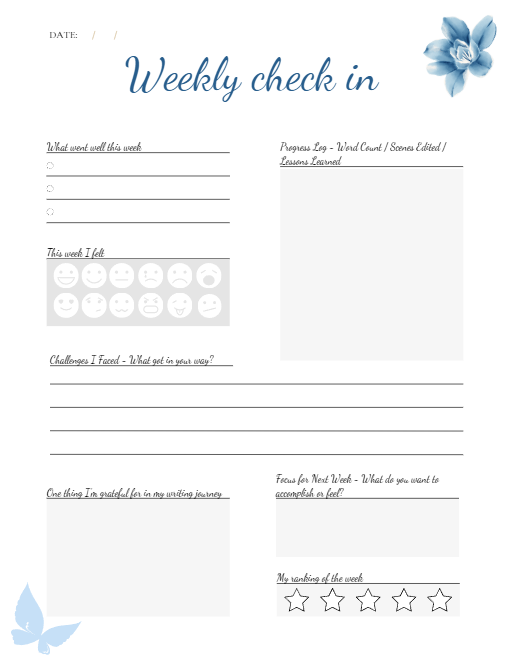
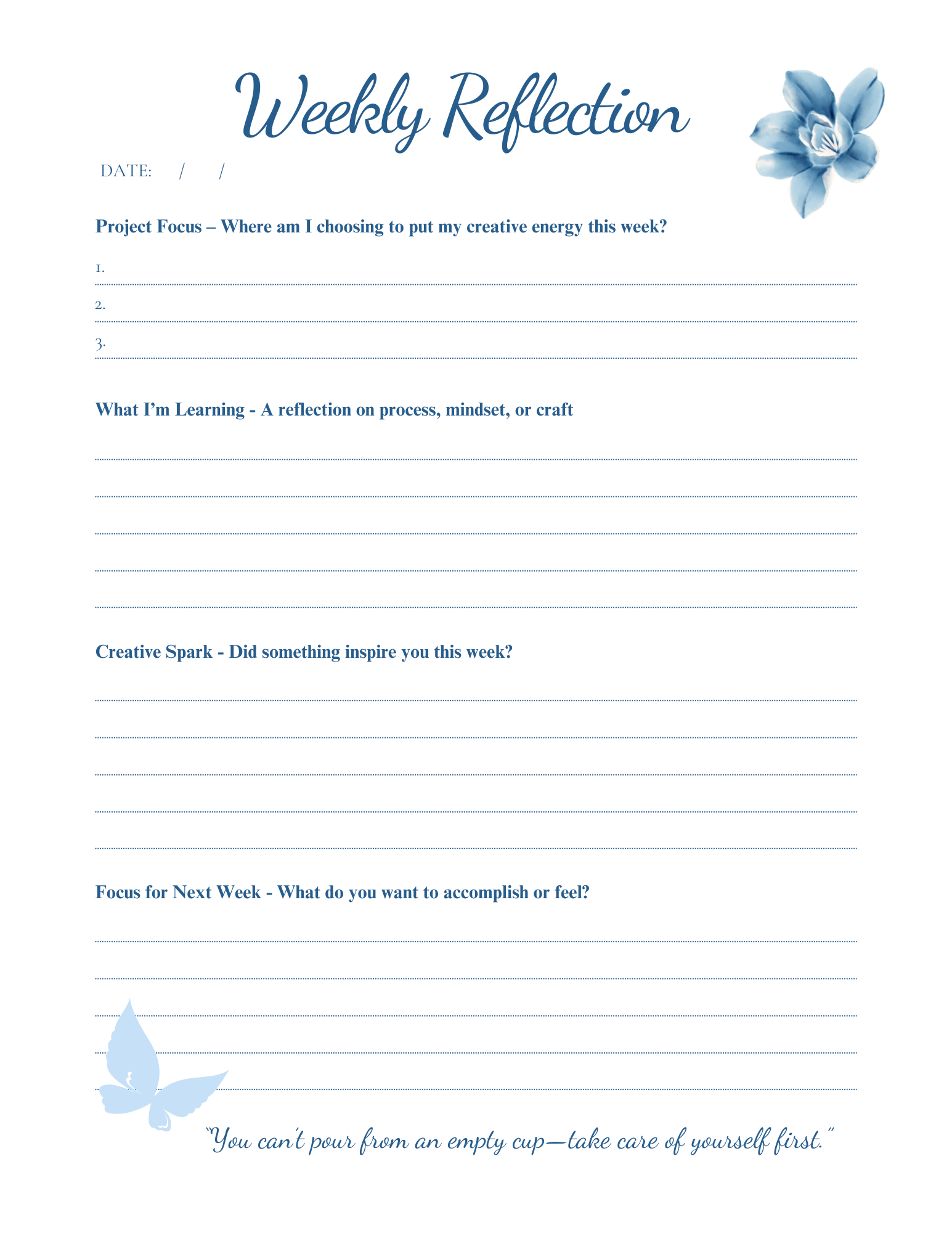
• A weekly five minute writing review
• A step based editing process
• A creative warm up ritual
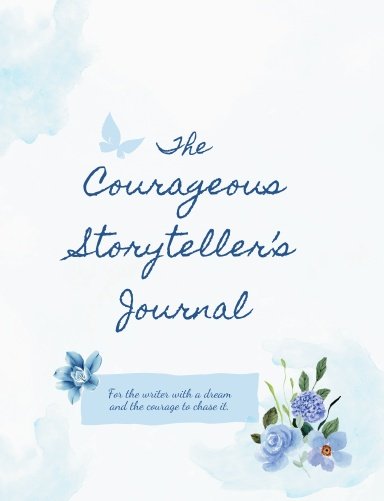
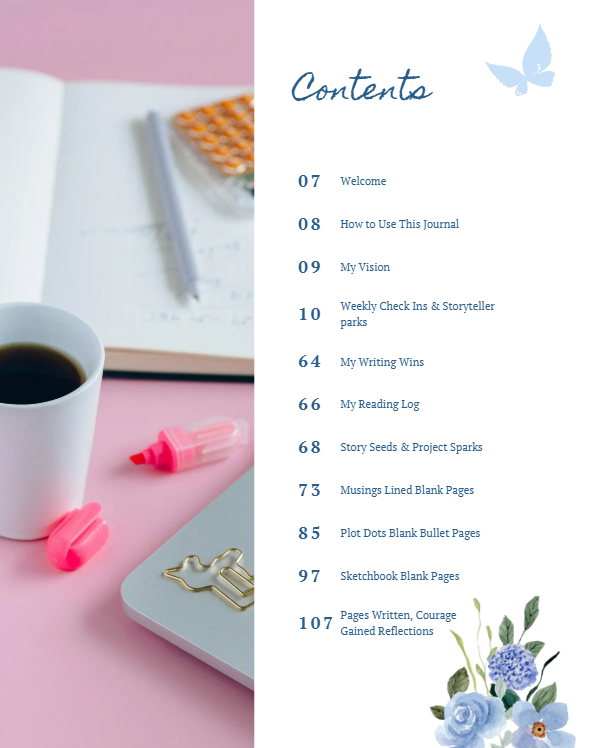
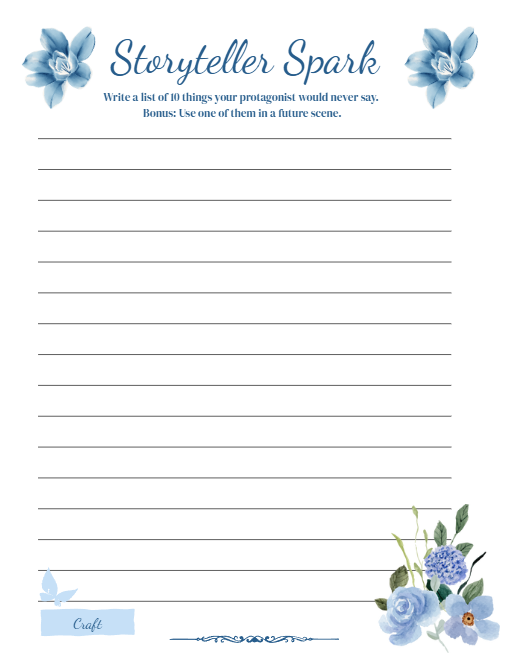
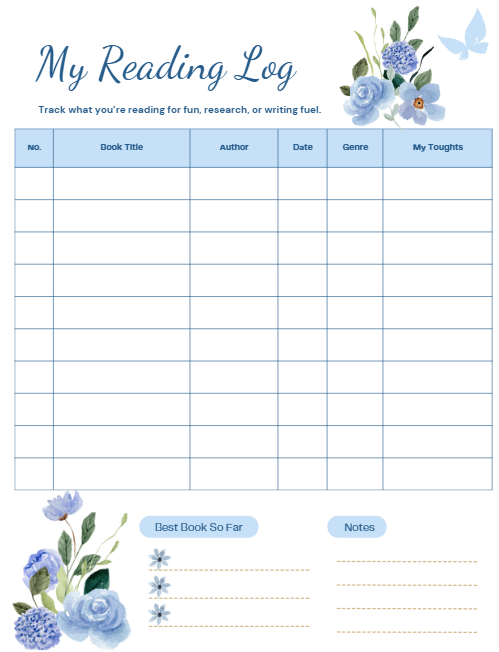
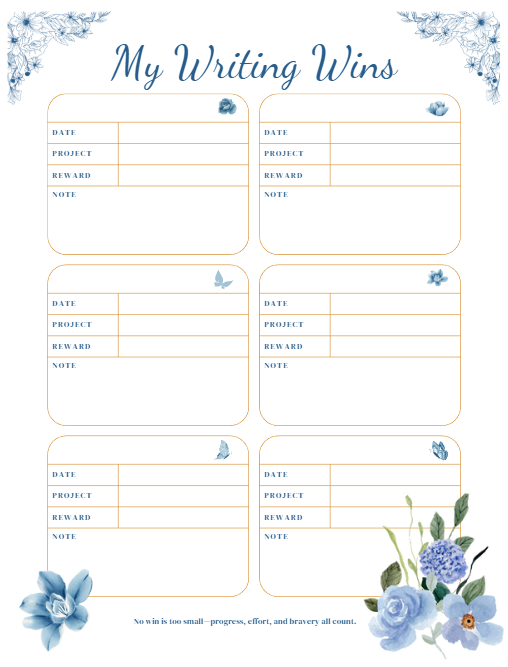
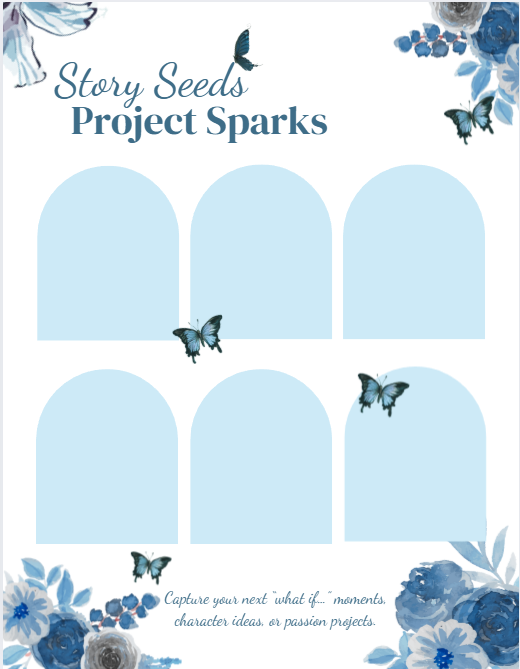
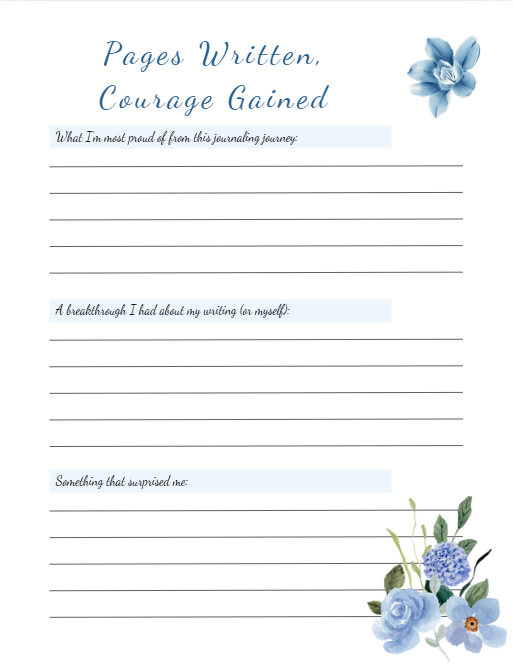
When systems hold the structure, you get to focus on creativity. This is exactly why I created The Courageous Storyteller’s Journal.
6. Write Your 2026 Writer’s Vision
This is your anchor for the year. Write a one paragraph statement answering:
• What kind of writer am I becoming?
• How do I want my writing life to feel?
• What do I want to have created by December 2026?
• How will writing support my confidence, joy, or purpose?
This is not a SMART goal. This is a deeper intention.
Example:
“In 2026, I am a writer who shows up consistently and trusts her creative voice. I am building a story I love, learning new skills, and growing my courage. I finish what I start and take tangible steps toward sharing my writing with the world.”
7. Choose Writing Goals That Move the Needle
Once you write your intention, pair it with three initial SMART goals. These are specific, measurable, attainable, relevant, and time based. This is a perfect opportunity to use our Free Dynamic Goal and Vision Tracker. It is set up to help you align goals into small achievable tasks with deadlines that you set (and adjust as needed) into a calendar you can print and place on your refrigerator to see daily!
Most writers pick vague goals like write more or finish my book. Vague goals lead to vague progress. Here are meaningful goals that accelerate growth:
- Define your story concept clearly.
- Build a workable outline or roadmap.
- Commit to a minimum writing frequency.
- Create a character bible.
- Establish a simple revision system.
- Join a writing community or find accountability.
- Complete one milestone project, such as:
- Draft Act One
- Write 10 scenes
- Complete a short story
- Finish your first revision pass
- Build your writing courage by sharing small pieces of work, entering contests, or joining critique groups.
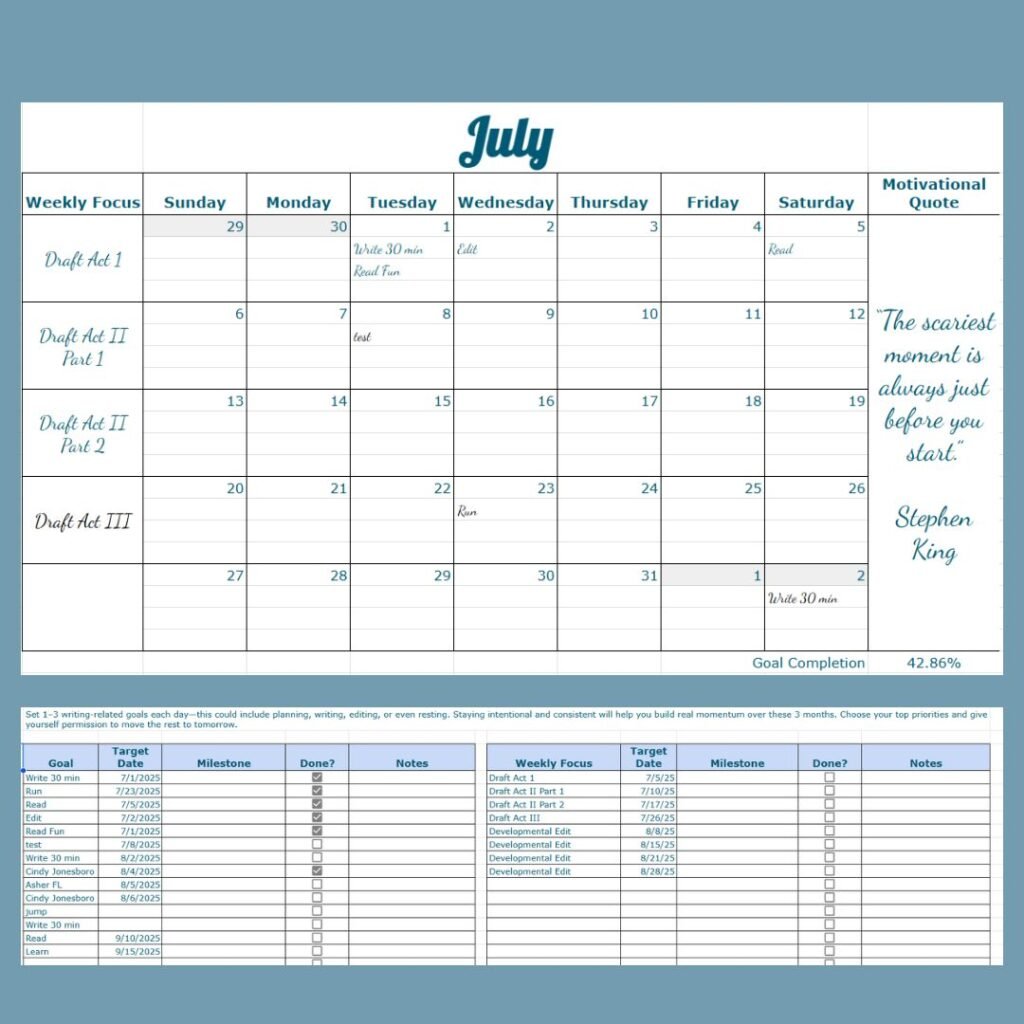
These are real world goals that shift your identity from someone who wants to write to someone who is writing. Here are examples tailored for new writers in a SMART Goal form.
SMART Goal Example 1
25 Min Session: I will write or revise my story a minimum of four days per week for at least 25 minutes per session from January through March.
SMART Goal Example 2
Cmpl Novel Outline: I will complete a full outline of my novel by March 15 using the structure that fits my Writer Type.
SMART Goal Example 3
First Revision Pass: I will finish my first revision pass of my manuscript by August 30 by following a step based revision plan.
Adding SMART goals gives your intention traction. They break your big vision into small, doable actions that build momentum throughout the year.
9. End the Year With Grace, Not Pressure
Your 2025 may not have gone as expected. Rarely does any year unfold exactly the way we imagine.
You may feel behind. You may think you are late starting your writing dream. You are not late. You are right on time.
December is not about judgment. It is about readiness.
It is about closing the year feeling grounded and stepping into the next one with a plan that honors your creativity, your responsibilities, and your desire to finally write the story inside you.
Join our email newsletter and enjoy a special holiday gift: the Your Best Writing Year Yet Journal Page, available in two beautiful backgrounds. Print it out, take it to your favorite café, or curl up at home as you reflect and plan your writing year ahead.
Final Encouragement
You do not need a perfect plan to write in 2026. You need a committed one.
You do not need to know everything. You need to take the next step.
You do not need to wait for January 1. Your writing life begins the moment you decide it is yours.
Your story matters. And the world is a better place when women like you find the courage to write it.